
Allegheny County Probate Court Records
Allegheny County probate court records span more than two centuries, starting from the county's founding in 1788 as one of Pennsylvania's original counties. The Orphans' Court Division and the Register of Wills office in Pittsburgh handle all estate proceedings, guardianships, adoptions, and will contests for this large and heavily populated county. These records are among the most extensive in the state. Searching them requires knowing which office holds the documents you need and understanding how the online and in-person access options work for different time periods.
Allegheny County Quick Facts
Allegheny County Probate Court Records and Offices
The Allegheny County Court of Common Pleas is organized into four divisions: Criminal, Civil, Family, and Orphans'. Probate matters fall under the Orphans' Court Division. The court has 43 commissioned judges and handles a very large volume of estate and guardianship cases each year. The Orphans' Court is located at the Frick Building, 1700, 437 Grant Street, Pittsburgh, PA 15219. The office phone is 412.350.5550. Hours are Monday through Friday, 8:30 AM to 4:30 PM. Motions hearings are scheduled starting at 9:00 AM.
The Register of Wills office is a separate location, found at 414 Grant Street, Pittsburgh. The phone number is (412) 350-4180. This office handles the initial probate of wills and the issuance of letters testamentary and letters of administration. It also oversees the Audit Department, which reviews all accounts and petitions for distribution filed in estates.
The following image links to the Allegheny County Orphans' Court Division official page, which covers jurisdiction and filing procedures.
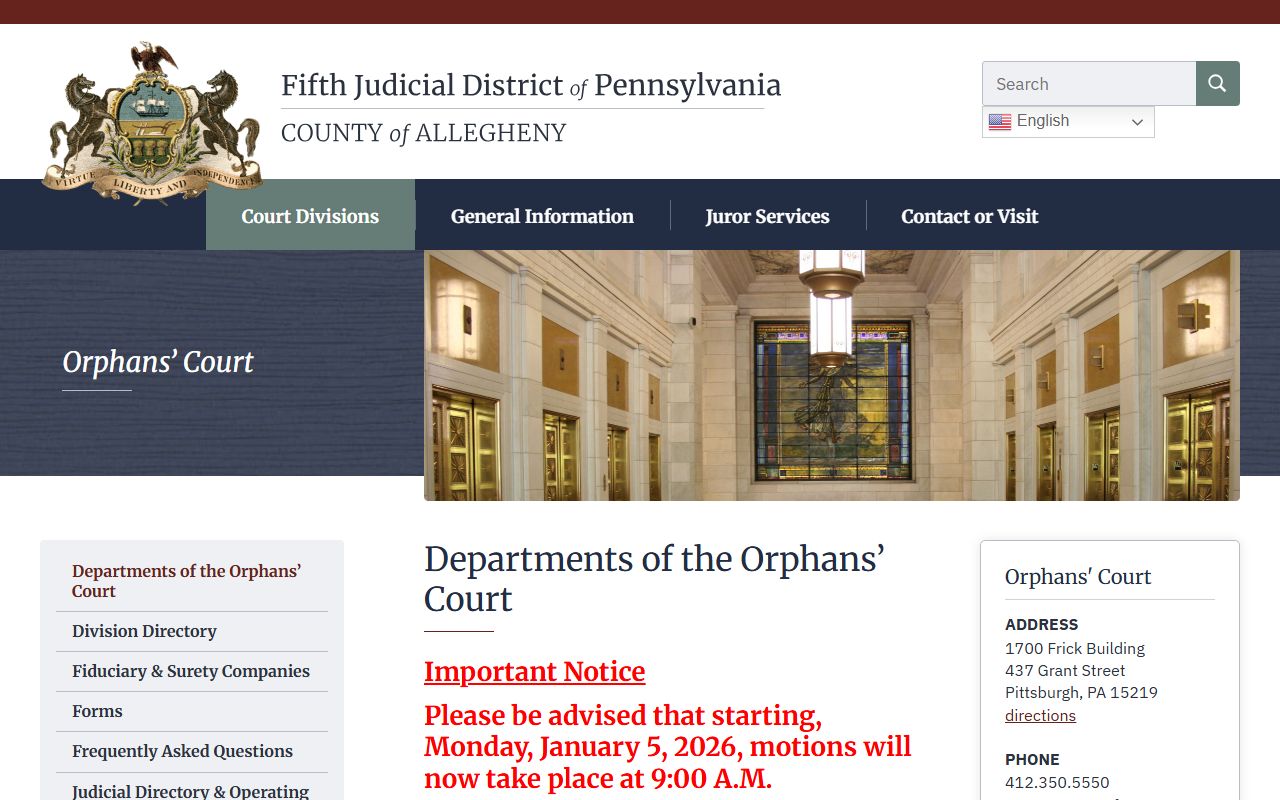
This page provides guidance on proceedings handled by the Orphans' Court, including estate administration, guardianship, and contested matters.
Searching Allegheny County Probate Records Online
The Allegheny County Department of Court Records portal allows online searches of probate and estate records. Users can search by party name, case number, date range, attorney name, case type, or case status. This online system covers estates filed from approximately the 1990s forward. Older records require an in-person visit or a written request to retrieve paper or microfilm files.
The image below comes from the Register of Wills records portal, showing the search interface available to the public.
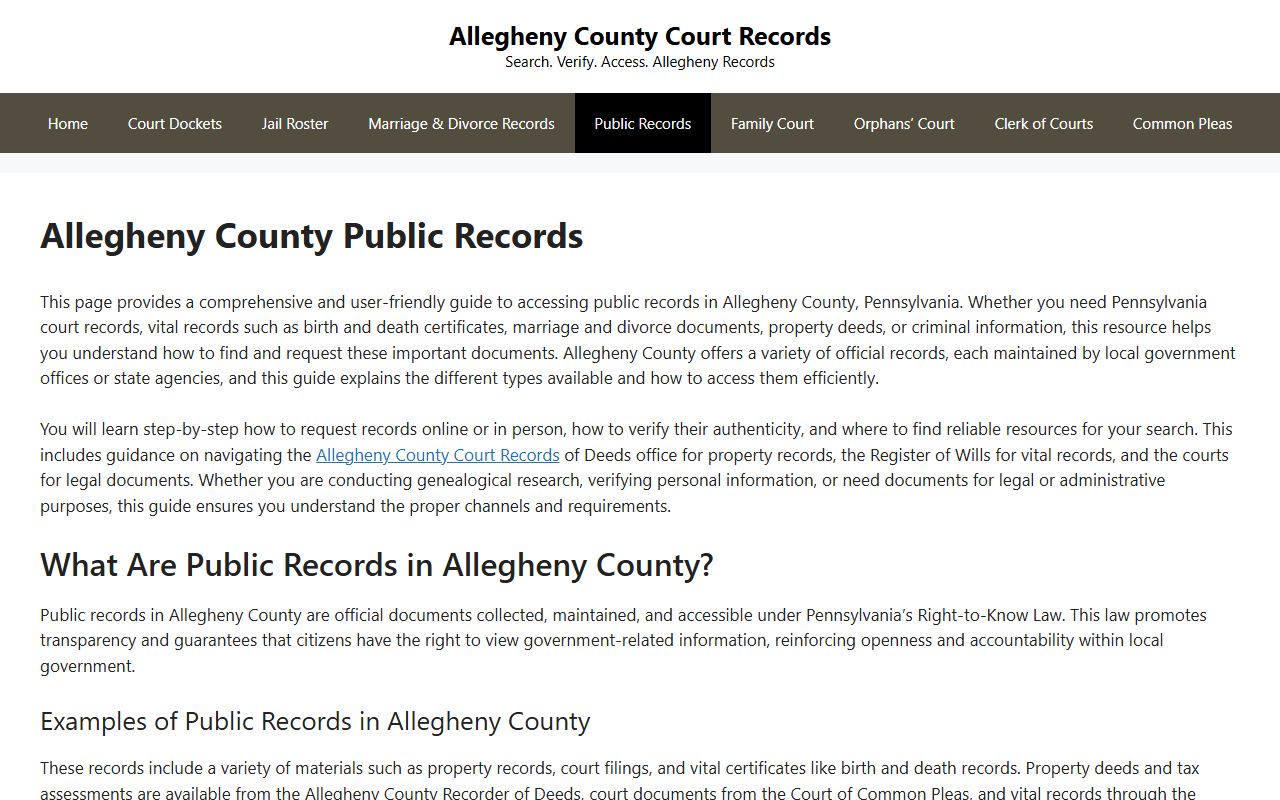
The portal provides access to estate case indexes, dockets, and document images for more recent filings in Allegheny County.
For cases not yet in the online system, the Department of Court Records staff can assist with locating physical files. Bring the full name of the decedent and the approximate year the estate was opened. Case numbers help speed up any search. The Unified Judicial System Portal is another statewide tool that may surface Allegheny County probate docket entries.
Note: Historical estate index records covering 1788 through 1971 and Will Books from 1789 through 1917 are held in archival storage; staff can assist in locating specific older files during regular business hours.
Allegheny County Probate Fees and Filing Requirements
The Allegheny County probate fees page lists current charges for estate filings. Fees vary based on the gross value of the estate. Additional fees apply for short certificates, certified copies, and filing specific petitions. The image below is from that fee schedule page.
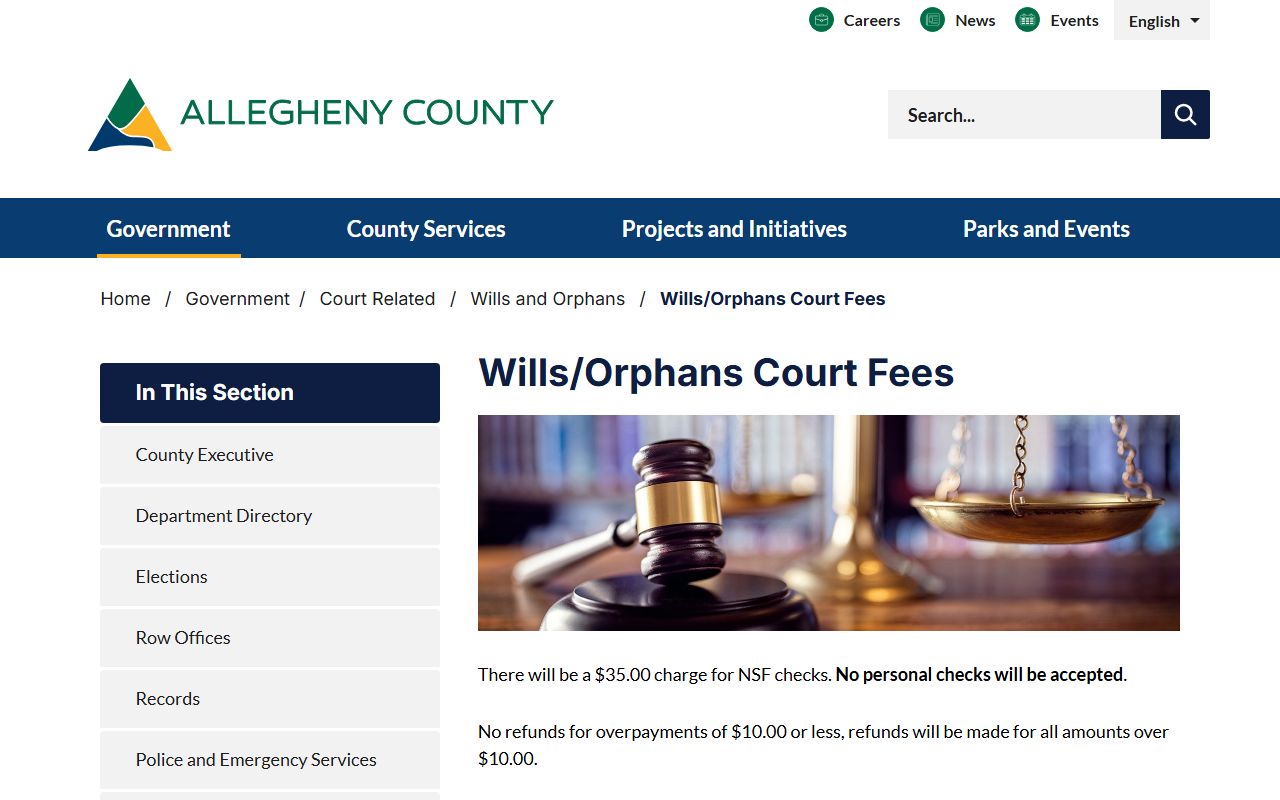
This resource shows exact dollar amounts for each type of filing, helping families and attorneys plan for the costs of opening and administering an estate in Allegheny County.
Pennsylvania's inheritance tax applies to most estate transfers. The tax rate depends on the relationship between the decedent and each beneficiary. Spouses and charities pay no tax. Lineal descendants pay 4.5%. Siblings pay 12%. All others pay 15%. A 5% discount on the total tax applies if payment is made within three months of the date of death. The Register of Wills collects this tax as agent for the Pennsylvania Department of Revenue.
Historical Allegheny County Probate Court Records
Allegheny County's probate records reach back to 1788, making them among the oldest in Pennsylvania. Estate Index records from that year through 1971 are available in bound volumes. Will Books cover 1789 through 1917. Orphans' Court Dockets run from 1789 through 1905. Will Packets and case files from 1789 through 1917 provide even more detailed documentation for researchers studying specific estates.
Genealogists and legal historians find these older records rich in detail. Wills from the late 18th and early 19th centuries name all heirs, describe land parcels by metes and bounds, and list personal property down to individual tools and household goods. These documents capture a level of personal detail that is hard to find in other historical sources.
The Pennsylvania Historical and Museum Commission holds complementary records and has digitized many early probate indexes. Cross-referencing state archives with Allegheny County's local holdings often fills gaps in research.
Allegheny County Court of Common Pleas and Probate Jurisdiction
The Allegheny County Court of Common Pleas exercises jurisdiction over all probate matters in the county. The image below shows the court's main portal, which links to all four divisions including Orphans' Court.
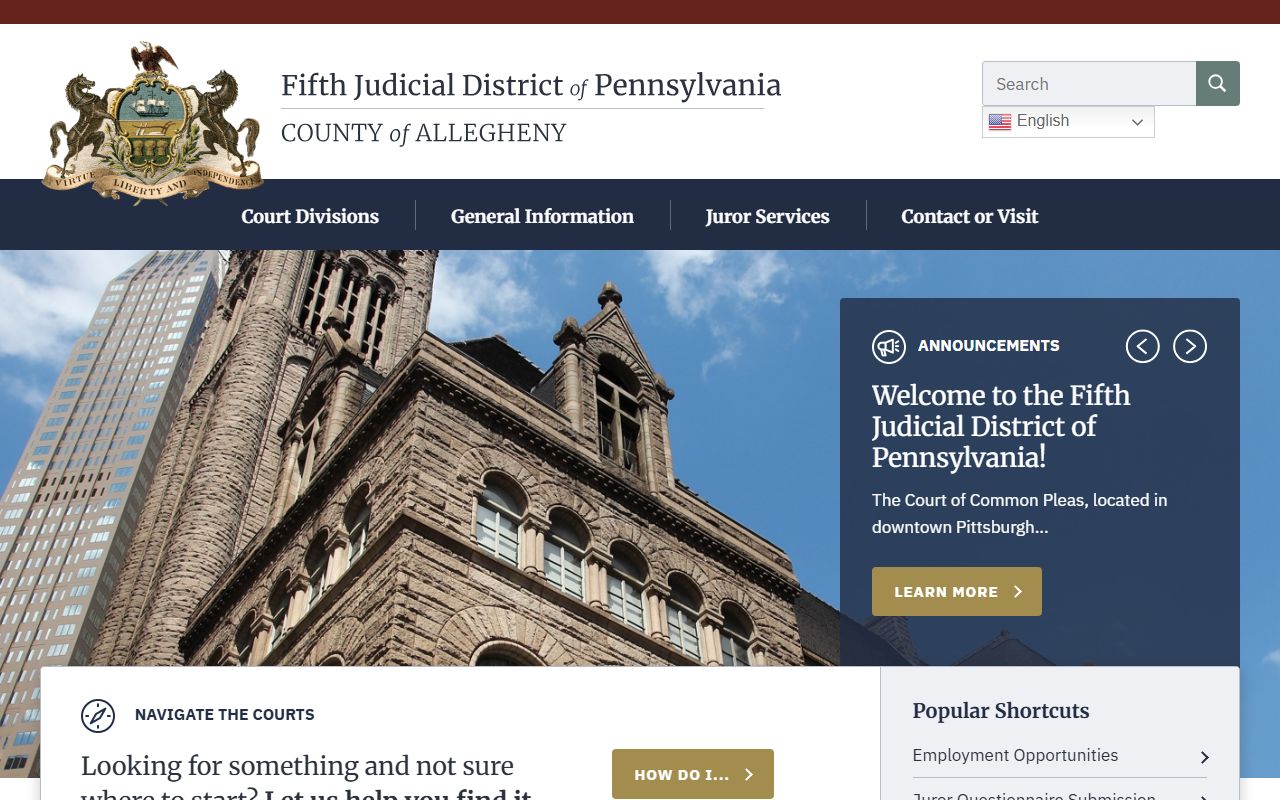
From this portal, users can navigate to specific divisions, find local rules, access forms, and review recent court orders affecting probate proceedings in Allegheny County.
The Orphans' Court Audit Department plays a key role in estate administration. It reviews every account filed by an executor or administrator. It also examines petitions for distribution and verifies that creditors have been properly paid before assets are released to beneficiaries. This review process protects heirs and creditors alike. Guardians appointed for minors or incapacitated adults can obtain a Guardianship Handbook from the court to understand their ongoing reporting obligations.
Standard Orphans' Court forms from the Administrative Office of Pennsylvania Courts provide starting templates for petitions. Local Allegheny County rules may add requirements, so review those rules before filing any document with the court.
Pennsylvania Probate Law Resources
Title 20 of the Pennsylvania Consolidated Statutes governs all probate and estate matters across the state. The full text is available through the Pennsylvania Legislature website. Allegheny County courts apply these statutes alongside local rules of court.
The Pennsylvania Code Title 231 covers Orphans' Court procedural rules. These rules govern how pleadings are formatted, how hearings are scheduled, and what notice must be given to interested parties. Knowing these rules helps both attorneys and self-represented parties present their cases properly.
General guidance for Pennsylvania residents can be found at PA Probate Help. The site offers plain-language explanations of the probate process, common pitfalls, and answers to frequently asked questions about wills and estate administration throughout Pennsylvania.
The Register of Wills Association of Pennsylvania connects all county register offices and provides resources on statewide practices and standards. This organization helps ensure consistent application of probate law across all 67 Pennsylvania counties.
Nearby Counties
Allegheny County borders several western Pennsylvania counties, and residents near those boundaries should confirm which county's probate court has jurisdiction based on the decedent's legal domicile at the time of death.