
Search Pennsylvania Probate Court Records
Pennsylvania probate court records are public documents held by the Register of Wills in each of the state's 67 counties. These records cover wills, estate inventories, letters testamentary, and Orphans' Court filings going back centuries in many counties. Whether you need to search for a recently opened estate or locate historical probate documents for genealogy, the process starts at the county level. This guide explains how to find and access Pennsylvania probate court records online, by mail, or in person.
Pennsylvania Probate Court Records Quick Facts
Where Pennsylvania Probate Court Records Are Kept
Probate court records in Pennsylvania are maintained at the county level. Each county has a Register of Wills office that handles the probate of wills, grants letters to personal representatives, and collects inheritance taxes as an agent of the Commonwealth. The Orphans' Court Division of the Court of Common Pleas oversees contested matters, guardianships, adoptions, and trust proceedings. Both offices keep records that are open to the public with limited exceptions.
The Registers of Wills and Clerks of Orphans' Court Association of Pennsylvania (RWOCAP) represents the 134 elected officials who serve across Pennsylvania's 67 counties. Some counties combine the Register of Wills and Clerk of Orphans' Court functions in one office. Others maintain separate offices. County classification, from 1st through 8th class, affects how offices are structured. Contact your county's office directly to confirm where to file or request records.
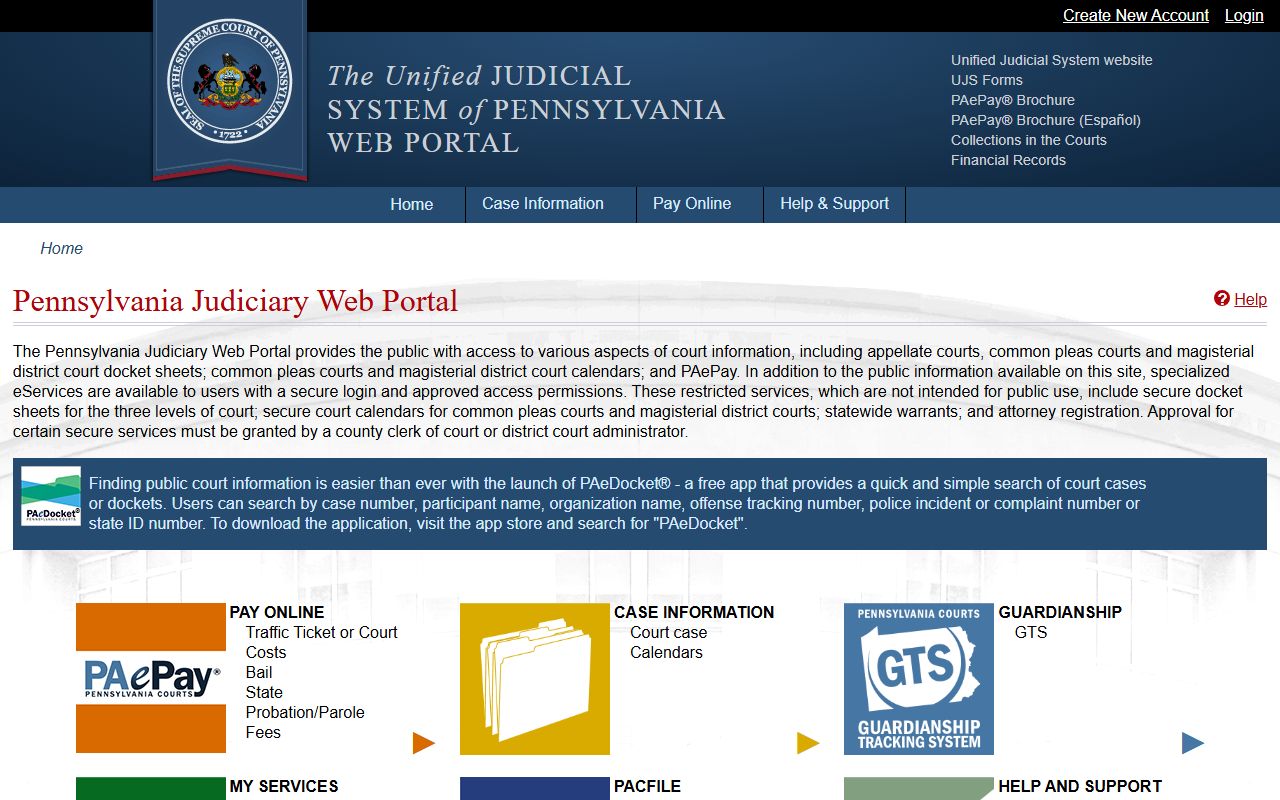
The Pennsylvania Unified Judicial System (UJS) Web Portal provides statewide access to court records including Orphans' Court docket sheets. You can search by party name, docket number, or attorney information to locate probate cases across multiple counties. The portal is free and requires no registration for basic searches. For full document images and certified copies, you must contact the county office directly.
How to Search Probate Court Records in Pennsylvania
There are several ways to search probate records in Pennsylvania. Online portals are the fastest starting point for most searches. In-person visits to the Register of Wills work best when you need certified copies or want to examine original documents. The approach depends on what county you are searching and how far back the records go.
Start with the UJS Portal at ujsportal.pacourts.us for a statewide search. The portal gives you access to Orphans' Court docket sheets from participating counties. You can search by the decedent's name or estate case number. Basic case information is free to view, including party names, filing dates, and case status. For estate files with document images, many counties now offer their own online search systems separate from the UJS portal.
Several counties have built their own records portals. Bucks County offers e-filing and a public web viewer at propublic.buckscountyonline.org. Erie County launched a new case management system called CourtPro in 2025 at courtpro.eriecountypa.gov, which covers Register of Wills and Orphans' Court records from 1994 to present. Dauphin County provides online access through dauphin.pa.publicsearch.us with free registration. Delaware County allows guest access to its online probate records search with no login required.
For in-person searches, go to the county courthouse where the decedent was legally domiciled at the time of death. Wills are accepted for probate only in the county where the person resided. Staff can search records by name or estate number and provide copies. Most offices charge per-page fees for copies and a higher rate for certified copies. Bring a valid photo ID and call ahead to confirm hours and any appointment requirements, as many offices now require appointments for probate proceedings.
Note: Many Pennsylvania counties require appointments for estate openings; walk-in service may be limited or unavailable.
Types of Pennsylvania Probate Court Records
Pennsylvania probate court records cover a wide range of documents. Understanding what each type contains helps you know which records to request. The Register of Wills and Orphans' Court together maintain the full set of estate administration documents from start to finish.
Wills are the founding documents of most probate proceedings. A will names the executor, identifies beneficiaries, and directs how property is to be distributed. Under Title 20 of the Pennsylvania Consolidated Statutes, a valid will must be in writing, signed by the testator, and witnessed by two competent witnesses present at the same time. The testator must be at least 18 years old and of sound mind. Wills filed at the Register of Wills become public records once probated.
Pennsylvania probate court records typically include the following documents:
- Petition for Grant of Letters (RW-02 form)
- Letters Testamentary or Letters of Administration
- Estate Inventory listing all assets and values
- Inheritance Tax Return (REV-1500) filed with the Register
- Accounts filed by the executor showing receipts and disbursements
- Orphans' Court petitions, notices, and court orders
- Decrees of distribution showing amounts paid to each beneficiary
Letters of Administration are issued when a person dies without a will. These letters name a personal representative to manage the estate under Pennsylvania intestate succession law. The Pennsylvania Consolidated Statutes, Chapter 21, governs intestate distribution. Property passes first to a surviving spouse and children, then to parents, siblings, and other relatives in a specified order. The Orphans' Court Division handles disputes about the estate, approval of accountings, and final distribution decrees.
Pennsylvania Inheritance Tax and Probate Records
The Pennsylvania Department of Revenue administers the state inheritance tax. County Registers of Wills serve as collection agents for the Commonwealth. The inheritance tax return becomes part of the estate file and is a public record at the Register of Wills office.
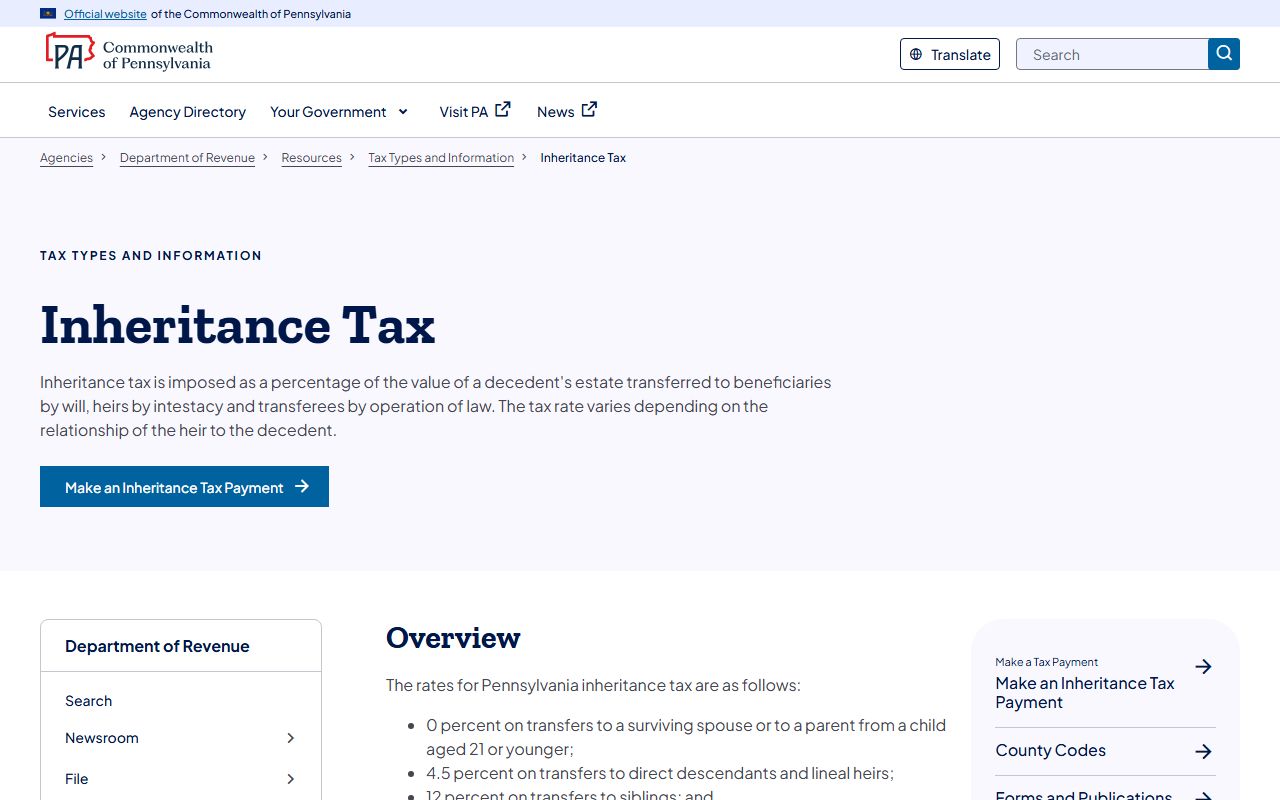
Tax rates vary by the heir's relationship to the decedent. The PA Department of Revenue sets rates at 0% for surviving spouses and parents inheriting from children under 21, 4.5% for direct descendants such as children and grandchildren, 12% for siblings, and 15% for all other heirs. Life insurance policies are exempt. The tax is due within nine months of death. A 5% discount applies if the tax is paid within three months. Payment must be made by check or money order payable to "Register of Wills, Agent" when submitted through the county office. Interest and penalties begin accruing after the nine-month deadline passes.
The REV-1500 Inheritance Tax Return form is filed with the Register of Wills in the county where the decedent lived. This form, along with supporting documents, is part of the estate file and can be accessed by the public. Social Security numbers and financial account numbers are redacted from public copies to protect privacy.
Pennsylvania Probate Laws and Court Procedures
Pennsylvania law governs every step of the probate process. These rules determine what records are created, who can access them, and how estates are administered. The courts and county offices follow the same statutory framework across all 67 counties.
Title 20 of the Pennsylvania Consolidated Statutes is the primary law covering decedents' estates, fiduciaries, and probate proceedings. Chapter 31 covers probate of wills and grant of letters. Chapter 33 addresses the duties and powers of personal representatives. Chapter 71 establishes the jurisdiction of the Orphans' Court Division over decedents' estates, trusts, guardianships, and related matters. Section 711(1) grants Orphans' Court authority over the administration and distribution of estate property. Personal representatives are entitled to reasonable compensation under Section 3537, with courts considering estate size, complexity, and time required.
The Pennsylvania Code, Title 231, contains the Rules of Civil Procedure for Orphans' Court proceedings. Rule 10.5 requires personal representatives to notify all beneficiaries and potential heirs within three months of appointment. Rule 10.6 mandates status reports to keep the court informed of progress. Local county rules may add to these requirements. Filers must review both state Orphans' Court Rules and the specific local rules for their county.
To begin probate in Pennsylvania, the executor or an interested party files a Petition for Grant of Letters with the Register of Wills in the county where the decedent lived. Required documents include the original will, a certified death certificate, the completed petition form, an estate information sheet, and payment of filing fees. The Register verifies the will's validity and issues Letters Testamentary or Letters of Administration. The process from filing to final distribution typically takes 9 to 24 months depending on estate complexity. Small estates valued at $50,000 or less, excluding real estate, may qualify for simplified administration.
Pennsylvania Orphans' Court Forms and Resources
Standardized forms are used in all 67 counties for Orphans' Court proceedings. These forms ensure consistency across the state and help personal representatives, attorneys, and self-represented filers complete required steps correctly.
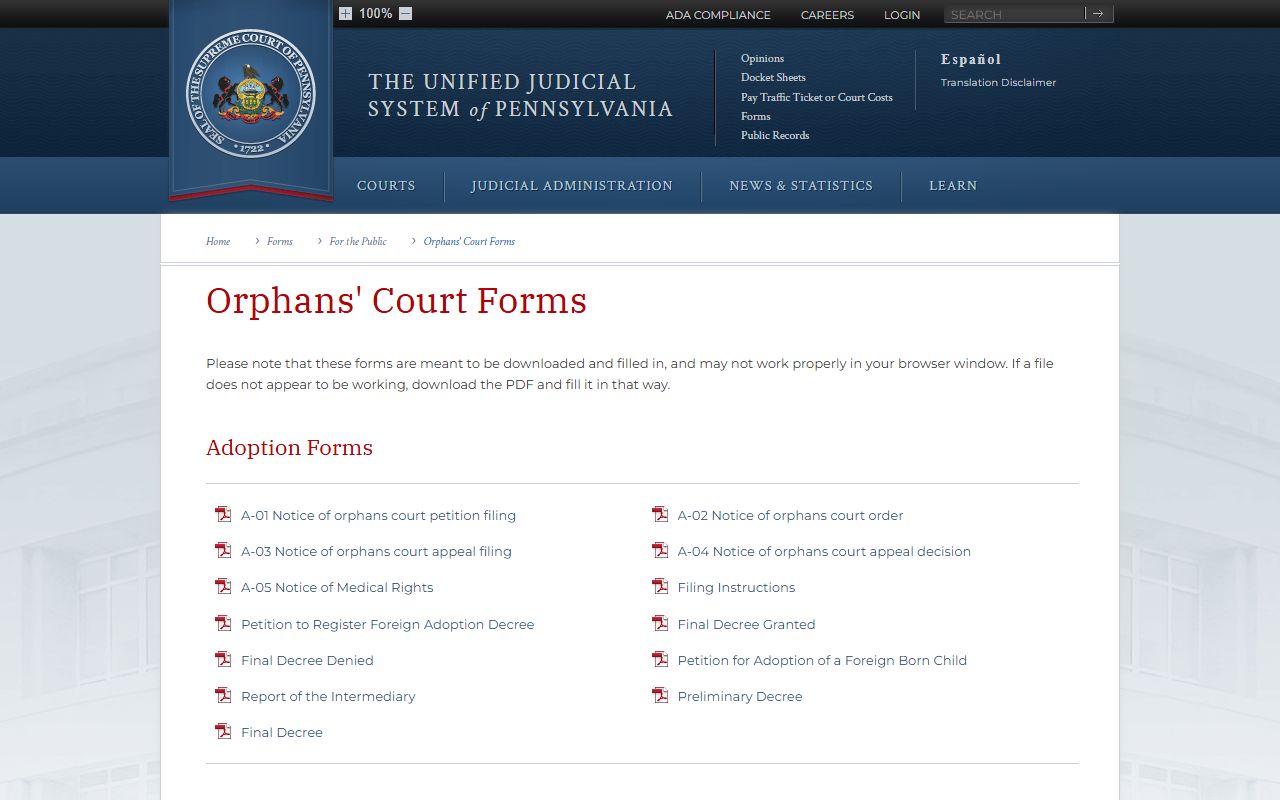
The Administrative Office of Pennsylvania Courts (AOPC) provides standardized Orphans' Court forms for all counties. Register of Wills forms include RW-02 Petition for Grant of Letters, RW-03 Oath of Subscribing Witness, RW-04 Oath of Non-Subscribing Witness, RW-06 Renunciation, and RW-07 Notice of Estate Administration. Estate administration forms include RW-09 Inventory and RW-10 Status Report. All forms are available as fillable PDFs on the AOPC website. Local county forms may supplement these state forms, and filers should check with their local Register of Wills for any additional requirements.
The PA Probate Help resource provides plain-language guidance on the probate process. Whether you are probating a will, handling an intestate estate, or dealing with a guardianship, this resource explains county-specific requirements and procedures. Each county operates independently with its own filing procedures, local rules, and office practices.
Historical Probate Records in Pennsylvania
Pennsylvania has some of the oldest probate records in the country. The Commonwealth began keeping records in 1682, and many counties hold continuous probate coverage going back to their formation dates. Historical records are valuable for genealogical research and legal matters involving older estates.
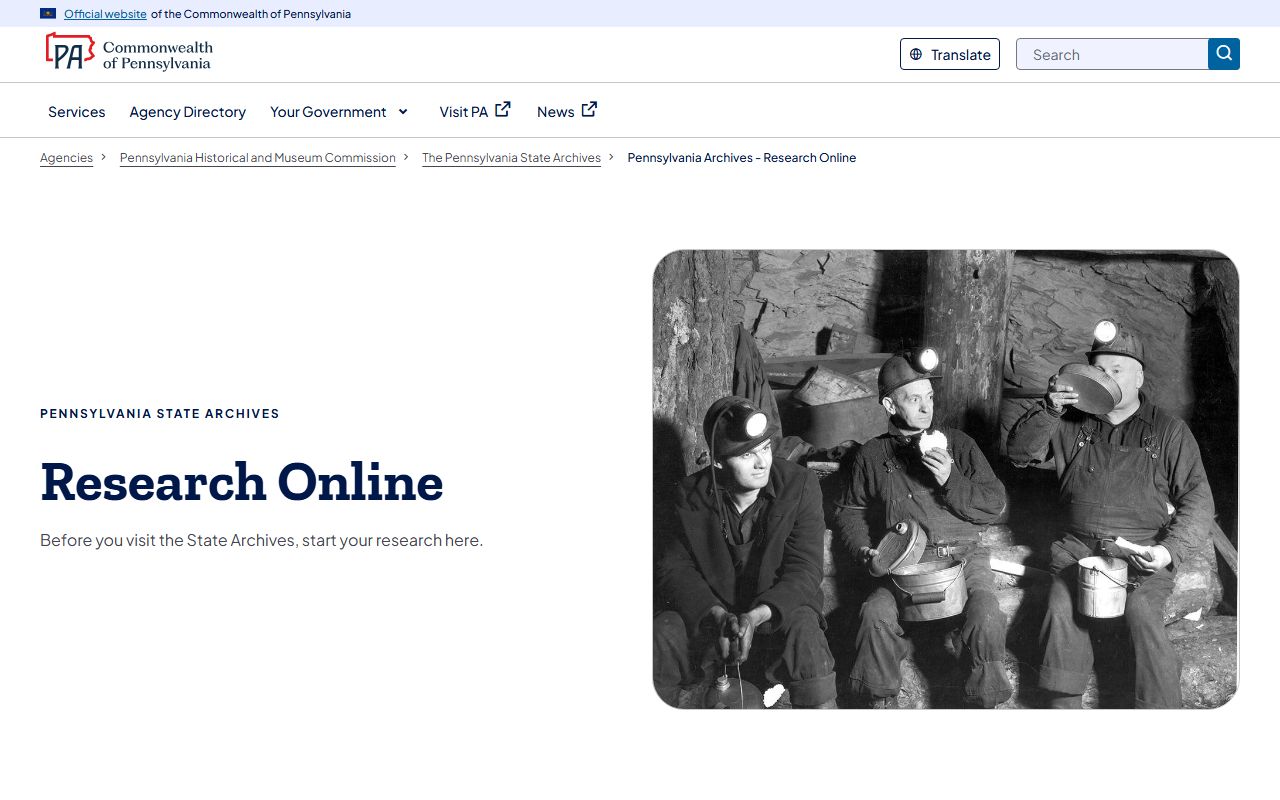
The Pennsylvania Historical and Museum Commission (PHMC) oversees the State Archives, which holds historical probate records dating to the colonial period. Philadelphia County probate records are indexed from 1682. The Archives maintains county-specific record groups for the Register of Wills and Clerk of Orphans' Court for most counties. For counties where local records were lost or damaged, the State Archives may hold duplicate or microfilmed copies. The Archives offers in-person research services and remote assistance. Selected probate indexes and record images are accessible online through the PA State Digital Collections portal.
FamilySearch provides comprehensive information about Pennsylvania probate records, including online collections covering "Pennsylvania, Wills and Probate Records, 1683-1993." The wiki explains that probates have been recorded at the county level since 1682, with most counties maintaining records from their formation date. Various record types are included: wills, bonds, petitions, accounts, inventories, administrations, orders, decrees, and distributions. The docket index or general index is the first place to search for evidence of probate proceedings.
Legal Help for Probate in Pennsylvania
The Pennsylvania Bar Association's Probate and Trust Law Section provides resources for attorneys and the public. The PBA maintains committees that monitor legislative developments in probate law and offers a lawyer referral service for people needing estate planning or probate attorneys. Local bar associations, particularly in major counties, publish practitioner handbooks specific to their jurisdictions.
While legal counsel is not required for probate in Pennsylvania, estate administration often goes more smoothly with attorney guidance. This is especially true for complex estates or when disputes arise among beneficiaries. Register of Wills staff can explain procedures but cannot give legal advice. If you need help, contact your county bar association's lawyer referral service or visit RWOCAP's county officials directory to find your local Register of Wills office.
Note: Pennsylvania probate procedures vary from county to county; always confirm requirements directly with the Register of Wills in the county where you are filing.
Browse Pennsylvania Probate Court Records by County
Each county in Pennsylvania has its own Register of Wills that keeps probate court records. Pick a county below to find local contact info, office hours, and resources for probate records in that area.
Probate Court Records in Major Pennsylvania Cities
Residents of major cities file probate at their county courthouse. Pick a city below to find probate records information for that area.