
Pittsburgh Probate Records and Orphans' Court Guide
Pittsburgh probate court records are filed and maintained by the Allegheny County Register of Wills and the Allegheny County Orphans' Court Division. Pittsburgh is the county seat of Allegheny County and the second-largest city in Pennsylvania, with a population of approximately 302,000. All estate probate filings for Pittsburgh residents, regardless of neighborhood, go through the Allegheny County courthouse. The Register of Wills issues letters testamentary and letters of administration, while the Orphans' Court Division handles contested estate and guardianship matters.
Pittsburgh Quick Facts
Where Pittsburgh Probate Records Are Filed
Pittsburgh residents file all probate matters at the Allegheny County Register of Wills, located at 414 Grant Street in Pittsburgh. This office is open Monday through Friday from 8:30 AM to 4:30 PM. The Register of Wills accepts the original will, the petition for probate, required identification, and the applicable filing fees. Upon acceptance, the Register issues short certificates and letters testamentary or letters of administration authorizing the executor or administrator to act on behalf of the estate.
The Allegheny County Orphans' Court Division occupies the 1700 Frick Building at 437 Grant Street in Pittsburgh. The Orphans' Court phone number is 412.350.5550. This court division handles contested probate matters, trust accountings, guardianship proceedings, and adoptions for Pittsburgh residents. When a beneficiary or heir challenges a will or disputes the conduct of an estate administrator in Pittsburgh, that dispute is heard before an Orphans' Court judge. The Orphans' Court page at alleghenycourts.us/orphans/ provides current procedural information and court schedules.
The Allegheny County public records portal at alleghenycountycourts.org/public-records/ gives researchers access to Register of Wills case information. You can look up estate filings by decedent name and find case numbers for Pittsburgh probate records. This online resource is available to the general public and does not require registration. More detailed document copies require a visit to the courthouse or a written request.
Pittsburgh Municipal Court and Related Records
Pittsburgh Municipal Court, located at 660 First Avenue, handles a wide range of civil and criminal matters for the city. The municipal court processes more than 70,000 cases annually, making it one of the busiest courts in western Pennsylvania. While the Municipal Court does not handle probate directly, its records are part of the broader Pittsburgh court system. Information about the Municipal Court is available at alleghenycourts.us/pittsburgh-municipal-court/.
The Pittsburgh Municipal Court page provides case information and procedural resources for matters filed in the city's court system.
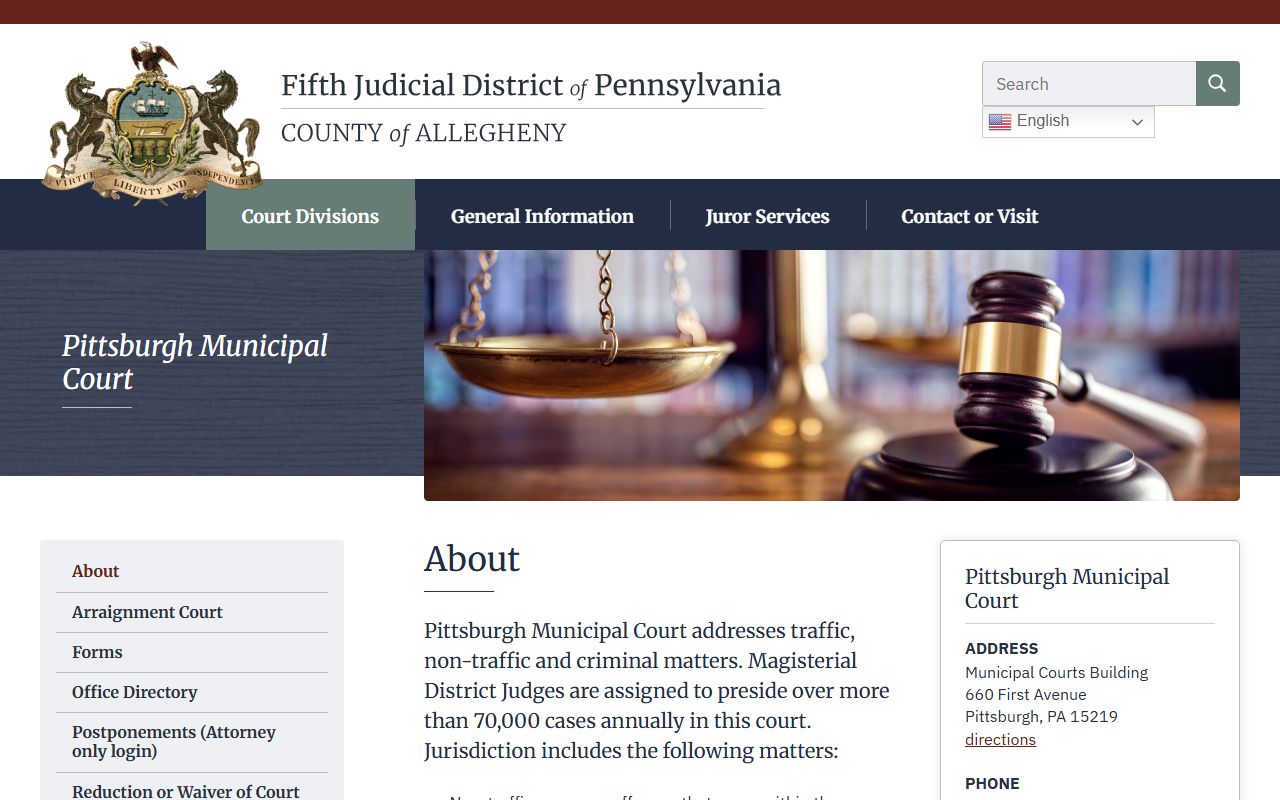
Pittsburgh Municipal Court records are separate from probate filings, which are handled exclusively through the Allegheny County courthouse system.
Pittsburgh residents may also interact with city government resources during the estate process. Executors sometimes need to contact city agencies regarding property taxes, utility accounts, or permits tied to estate assets. The City of Pittsburgh government portal at pittsburghpa.gov/ provides access to city services and department contacts. Resolving municipal obligations is often a necessary step before an estate can be closed in Pittsburgh.
Note: Pittsburgh probate filings go through Allegheny County regardless of which Pittsburgh neighborhood the decedent lived in.
Allegheny County Probate Filing Process
Opening a probate estate in Pittsburgh begins with gathering the required documents. The executor or administrator brings the original will, the original death certificate, a completed petition for probate, and valid photo identification to the Allegheny County Register of Wills at 414 Grant Street. Filing fees are based on the size of the estate. The Register reviews the documents, admits the will to probate if it meets Pennsylvania requirements, and issues letters testamentary to the executor named in the will.
When a Pittsburgh resident dies without a will, the estate is called an intestate estate. A surviving spouse, adult child, or other interested party may petition the Allegheny County Register of Wills to be appointed administrator. The administrator receives letters of administration and then has the legal authority to manage and distribute the estate. Pennsylvania intestacy law determines how assets are divided among heirs when no valid will exists.
The estate administrator or executor must notify known creditors of the estate, pay valid debts, and file a Pennsylvania inheritance tax return. The Pittsburgh government portal at pittsburghpa.gov/ can help identify city agencies that may have outstanding claims against an estate. After debts and taxes are paid, the remaining assets are distributed to beneficiaries according to the will or Pennsylvania intestacy law. A final accounting may be required in some Pittsburgh probate cases.
The City of Pittsburgh government website shows services and resources that Pittsburgh executors may need during estate administration.
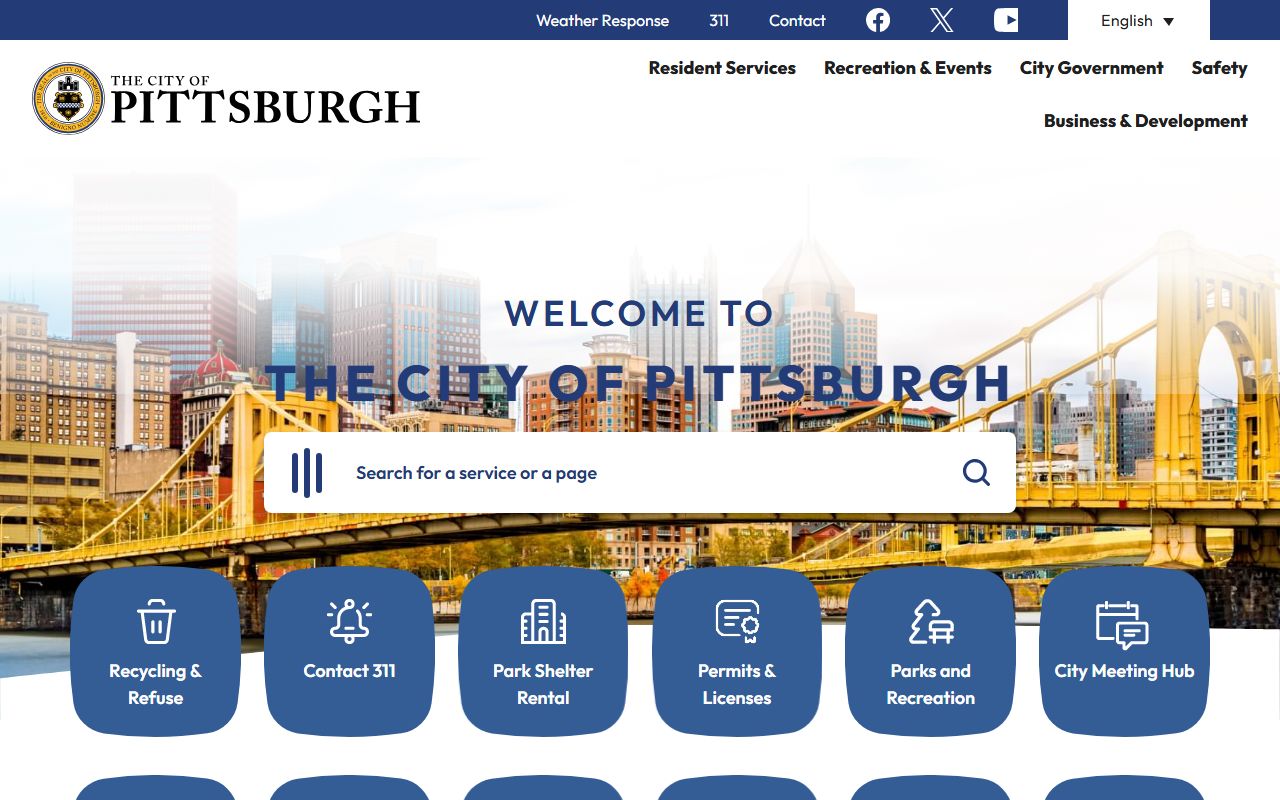
City of Pittsburgh departments can be contacted through the official government portal when executors need to resolve municipal accounts tied to estate property.
Note: Pennsylvania requires that the inheritance tax return be filed and the tax paid within nine months of the decedent's date of death to avoid penalties.
Inheritance Tax Rates for Pittsburgh Estates
Pennsylvania imposes an inheritance tax on assets passing from Pittsburgh decedents to most beneficiaries. The tax rate depends on the relationship between the decedent and the beneficiary. Surviving spouses pay zero inheritance tax on all assets inherited from a deceased spouse. Lineal descendants, including children, grandchildren, and parents, pay a 4.5% rate. Siblings of the decedent pay a 12% rate, and all other beneficiaries pay a 15% rate on inherited assets.
Charitable organizations and certain government entities are generally exempt from Pennsylvania inheritance tax. Small estates may qualify for a simplified administration process that reduces the filing burden. Executors and administrators handling Pittsburgh probate estates should confirm the current rules with the Allegheny County Register of Wills or consult a Pennsylvania estate attorney. More information on inheritance tax is available through the Pennsylvania Department of Revenue at revenue.pa.gov.
A 5% discount applies to inheritance tax paid within three months of the decedent's date of death. This discount provides an incentive for early payment and can result in meaningful savings for larger Pittsburgh estates. The tax return and payment are submitted through the Allegheny County Register of Wills, which forwards them to the Department of Revenue. Keeping accurate records of all estate assets and their values is essential for completing the Pittsburgh inheritance tax return correctly.
Searching Pittsburgh Probate Records
Pittsburgh probate court records are public documents. Members of the public may search estate filings at the Allegheny County courthouse or through the public records portal online. The Pennsylvania Unified Judicial System portal at ujsportal.pacourts.us allows searches of Allegheny County court cases by party name. This tool is free to use and provides basic case information including filing dates and case status for Pittsburgh probate matters.
For copies of specific documents, in-person requests at 414 Grant Street provide the fastest results. Bring the decedent's full name and approximate year of death to help staff locate the estate file. Certified copies of Pittsburgh probate records are available for a fee. Plain copies cost less than certified ones. The Register of Wills staff can confirm current copy fees when you visit or call (412) 350-4180.
Historical Pittsburgh probate records dating back many decades are preserved in the Allegheny County archives. Genealogists researching Pittsburgh family histories often find valuable information in estate inventories, which list property owned by the decedent at the time of death. The Pennsylvania Historical and Museum Commission maintains additional archival probate records. The Pennsylvania Consolidated Statutes govern the legal framework for all Pittsburgh probate proceedings.
Note: Pennsylvania orphans' court forms for Pittsburgh filings are available at no charge through pacourts.us/forms/for-the-public/orphans-court-forms.
Pittsburgh County Probate Records
Pittsburgh is the county seat of Allegheny County, and all probate filings for Pittsburgh residents are processed through the Allegheny County courthouse. For a complete overview of county probate offices, fees, office hours, and estate resources, visit the Allegheny County probate records page.
Nearby Pennsylvania Cities
Residents of nearby Pennsylvania cities file probate records at their respective county Register of Wills offices.